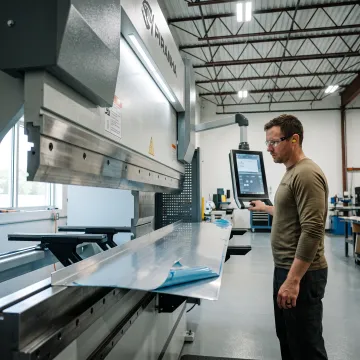
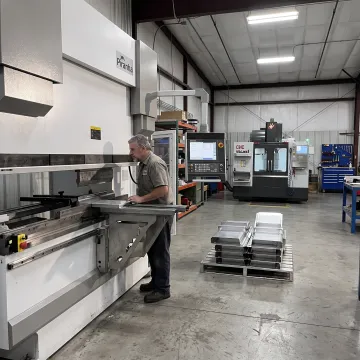
What type of machine is used to bend aluminum?
Aluminum is commonly bent with a press brake for straight-line bends in sheet or plate, or with a plate bending roll when a job requires curves, cylinders, or larger radii. The best machine depends on material thickness, alloy and temper, part length, bend geometry, tooling, and production volume. CNC control is especially useful when repeatability and programmed part setups are important.
What thickness of aluminum is bendable?
A wide range of aluminum thicknesses can be bent, but practical limits depend on the alloy, temper, bend radius, tooling, machine tonnage, and flange length. Thin sheet can form easily with appropriate tooling, while thicker plate requires greater capacity and often a larger inside radius. Harder tempers are more prone to cracking, so material specifications should be reviewed before selecting a bending method.
How does aluminum alloy affect bending?
Alloy and temper strongly influence how aluminum behaves during forming. Softer, more ductile material generally tolerates tighter bends, while higher-strength or heat-treated material may require a larger bend radius to reduce cracking risk. Grain direction can also affect results. Confirm the material grade, temper, thickness, and required finished geometry before establishing tooling, radius, and machine-capacity requirements.
What is a safe bend radius for aluminum?
There is no single safe radius for every aluminum job. A suitable inside bend radius is determined by the alloy, temper, thickness, grain direction, and acceptable risk of surface marking or cracking. As material becomes harder or less ductile, a larger radius is generally needed. Use the material supplier’s forming guidance and conduct sample bends before committing to production settings.
When should I use a press brake instead of bending rolls?
Use a press brake when parts need straight bends, flanges, channels, boxes, or other angular forms. Use bending rolls for continuously curved work, including cylindrical shells, cones, and large-radius sections. Some fabrication operations need both capabilities. Consider part geometry, material thickness, bend radius, required tolerances, batch size, and how quickly operators must change from one job to another.
What information is needed to size a bending machine?
Start with the widest and thickest material you expect to form, then document alloy, temper, required bend radius, part length, bend angles, and anticipated production volume. Also consider tooling requirements, floor space, electrical service, material handling, and future capacity goals. These details help determine whether a press brake, plate roll, or another forming solution is the appropriate investment.
Can an older plate bending machine be upgraded?
Eligible older mechanical plate bending machines with slip-ring motors may be updated with Piranha-Bertsch’s tri-speed electrical control package. The retrofit replaces the manual reversing drum controller and consolidates controls into a NEMA-12 enclosure with a reduced-voltage, safety-oriented operator console. A compatible motor brake is necessary to meet current safety requirements; if one cannot be added, a replacement drive motor may be needed.
What support is available after purchasing equipment?
Piranha provides equipment guidance during configuration, quoting, purchase, shipping, and setup planning. Its U.S.-based support resources include technical assistance by phone, email, and remote diagnostics, along with training options and parts availability. In-stock parts ship the same day from Belvidere, Illinois. Specific training, installation, warranty, and support terms should be confirmed for the selected machine and order.